
Hire Employees in Madagascar
2026 EOR, Payroll and Employment Guide
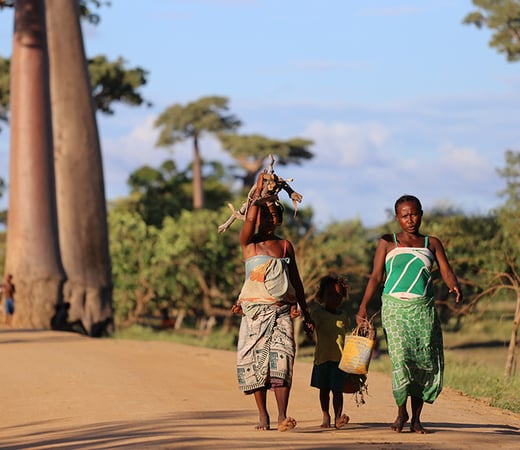
Can a foreign company hire employees in Madagascar?
Yes. A foreign company can employ in Madagascar through a locally registered entity or an Employer of Record. The 2024 Labour Code expressly recognises portage salarial, which supports EOR-style arrangements.
Two routes exist. Registering a Malagasy entity gives you direct employment and permit sponsorship, followed by enrolment with the CNaPS, an approved inter-company medical service and the FMFP.
An Employer of Record removes that setup. The EOR is the legal employer, runs payroll, files the combined CNaPS-FMFP return and withholds IRSA, while day-to-day direction stays with you.
The 2024 Labour Code expressly addresses portage salarial, which gives EOR-style arrangements a clearer statutory footing here than in many comparable markets. Antananarivo is an established francophone outsourcing centre, which is where most international hiring is concentrated.
Sources: GX operating experience. Madagascar EOR payrollverified 19 August 2026
EOR, entity or contractor, which model fits?
Use an EOR for speed and low headcount. Employer cost is a flat 19% up to the ceiling, so the decision turns on setup time and administration rather than contribution savings.
Employer contributions total 19%. CNaPS at 13%, occupational health at 5% and the FMFP vocational training levy at 1%. The employee pays 2%: 1% CNaPS and 1% occupational health.
Note that some published guidance gives employer cost as 18% by omitting the FMFP levy. The fund is real, collected on the same combined return as CNaPS, and payable by the employer only. One guide also shows a 1% employee FMFP contribution, which does not exist.
Even at 19%, this is among the more moderate employer burdens in francophone Africa, and because contributions are capped the effective rate falls away for senior salaries.
| Employer of Record | Own entity | Contractor | |
|---|---|---|---|
| Time to first hire | 2–4 weeks | 2–4 months (registration, CNaPS, SMIE and FMFP enrolment) | Days, but only for independent work |
| Employer contributions | 19%, capped at 8× the SME | 19%, capped at 8× the SME | None, the self-employed handle their own position |
| Ongoing obligations | EOR runs payroll, the CNaPS-FMFP combined return and IRSA withholding | Full local payroll, corporate tax and annual returns | Invoice-based; no social affiliation |
| Work-permit sponsorship | Yes. EOR sponsors as legal employer | Yes, your entity sponsors | No |
| Misclassification risk | Low, statutory employment | Low, statutory employment | High, affiliation is automatic for any contract of three months or more run the risk check |
| Best for | First 1–12 hires, BPO and market testing | Permanent operations, textiles, mining and outsourcing at scale | Short, independent, project-based engagements |
Break-even rule of thumb: EOR fees begin to exceed the running cost of a Malagasy entity somewhere between 12 and 18 employees. Model both, see EOR vs Entity for the framework.
Sources: Code du Travail (Loi n°2024-014)Economic Development Board of MadagascarGX operating experience. Madagascar EOR payrollverified 19 August 2026
How Employer of Record hiring works in Madagascar
How much does it cost to employ someone in Madagascar?
19% in total, CNaPS 13%, occupational health 5% and vocational training 1%, all capped at eight times the minimum hiring wage.
All three contributions are capped at eight times the minimum hiring wage, and that ceiling is the single most confused figure in Malagasy payroll.
The confirmed position is MGA 262,680 for the SME since 1 March 2024, giving a ceiling of MGA 2,101,440 a month in the general regime and MGA 2,132,000 in the agricultural regime. Maximum employer contribution is therefore about MGA 399,000 a month.
At least five different ceilings are in circulation. Published figures include MGA 1,500,000, MGA 1,600,000, MGA 2,000,000, MGA 2,101,440 and MGA 2,400,000. Several derive from superseded minimum wages; two carry their own "to be verified" caveats.
The 2026 position is unresolved. A rise in the SME to MGA 300,000 was agreed with effect from 1 March 2026, which would lift the ceiling to MGA 2,400,000. One source reports it as applied; another states that the implementing decree remained pending, so the start-of-year ceiling continued to apply. Confirm with the CNaPS before running payroll rather than assuming either.
Affiliation is compulsory for all private sector employees including domestic workers and apprentices, and is automatic from hire for any contract of at least three months. The affiliation card is issued once and lasts the whole working life.
Madagascar does not cover unemployment risk at all. There is no unemployment insurance branch, which is unusual and shapes what termination actually means for an employee here.
Sources: Caisse Nationale de Prévoyance SocialeDirection Générale des ImpôtsLoi de finances 2026 (Loi n°2025-021)Décret n°2024-453 du 18 avril 2024CLEISS, cotisations à MadagascarOSTIEFonds Malgache de Formation ProfessionnelleManao. IRSA calculation guidanceDirection Générale des Impôts, allowancesEmployer contribution schedule 2026verified 19 August 2026
2026 mandatory employer contributions
| Contribution | Total rate | Employer share | 2026 cap | Effective cost |
|---|---|---|---|---|
| CNaPS, employer | 14% combined | 13% employer | MGA 2,101,440 / month | Pension, family benefits and work accidents |
| CNaPS, employee | 14% combined | 1% employee | MGA 2,101,440 / month | Deductible from the IRSA base |
| Occupational health, employer | 6% combined | 5% employer | MGA 2,101,440 / month | OSTIE, ESIA, AMIT or another approved SMIE |
| Occupational health, employee | 6% combined | 1% employee | MGA 2,101,440 / month | Also deductible from the IRSA base |
| FMFP vocational training | 1% | 100% employer | MGA 2,101,440 / month | Employer only, no employee share exists |
| Contribution ceiling | 8× the SME | Both sides | MGA 2,101,440 / month | MGA 2,132,000 in the agricultural regime |
| Pending 2026 increase | SME to MGA 300,000 | Both sides | Would give MGA 2,400,000 | Agreed for 1 March 2026; decree reported pending |
| Unemployment insurance | None | Madagascar does not cover unemployment risk | ||
| Maximum employer contribution | 19% of the ceiling | 100% employer | ≈ MGA 399,000 / month | Flat in absolute terms above the ceiling |
| Total mandatory employer cost | 19% of gross, capped | MGA 2,101,440 / month | Some sources give 18% by omitting the FMFP |
Worked example
| Gross salary MGA 1,500,000 / month | |
| CNaPS employer. 13% | MGA 195,000 |
| Occupational health employer. 5% | MGA 75,000 |
| FMFP employer. 1% | MGA 15,000 |
| Employee contributions. 2% | MGA 30,000 |
| Employer cost as a percentage of gross | 19.0% |
| Total employer cost | MGA 1,785,000 · 19.0% above gross |
Madagascar employer-cost calculator
Enter a gross monthly salary to see the breakdown.
What does a real hire cost? Benchmarks by role
Employer cost is 19% up to MGA 2,101,440 a month and flat in absolute terms above it, so the effective percentage falls sharply for senior salaries.
Gross monthly salaries in ariary. Contributions are capped at eight times the minimum hiring wage, so employer cost is flat in absolute terms above that level.
Benchmarks below are gross monthly salaries in ariary. Employer contributions are capped at eight times the minimum hiring wage, so the on-cost percentage falls sharply above that ceiling.
Sources: Décret n°2024-453 du 18 avril 2024verified 19 August 2026
How Madagascar compares & employer on-costs in the region
Indicative 2026 statutory employer rates on typical professional salaries, before benefits and 13th-month customs. Full country data: hiring in Cameroonhiring in Côte d’Ivoire.
How do payroll, income tax and the 13th month work?
Monthly payroll. IRSA is withheld at source, and CNaPS states contributions are paid monthly while several practitioner sources describe quarterly declaration.
IRSA was reformed for 2026 by Loi n°2025-021. The scale now runs across six bands from 0% to 25%. The first MGA 350,000 a month is exempt, and the new top rate of 25% applies above MGA 4,000,000 a month, which in practice reaches under a tenth of formal sector employees.
The base is gross salary less the employee’s own contributions, 1% CNaPS and 1% occupational health, both capped, rounded down to the nearest hundred ariary.
Two adjustments sit outside the scale. A minimum perception of MGA 3,000 a month applies above the exemption threshold, and a reduction of MGA 2,000 applies for each dependant. The code sets no maximum number of dependants. Note that one international guide gives the minimum as MGA 2,000, which is the per-dependant reduction rather than the floor.
The first twenty overtime hours each month are exempt from IRSA, as a deliberate encouragement to work.
Transport and meal allowances are taxable. The DGI treats per-day transport and meal indemnities as part of gross remuneration, subject to IRSA and contributions, which catches out employers who assume they are exempt reimbursements.
Filing frequency is disputed. The CNaPS states that the employer pays contributions monthly, while several practitioner sources describe quarterly declaration of social charges and quarterly returns to the medical service. IRSA is remitted monthly, commonly stated as before the 15th. Confirm the applicable cycle with the CNaPS for your entity.
A single combined return covers CNaPS and FMFP together, filed with the nominative statement of salaries.
Sources: verified 19 August 2026
2026 resident income tax brackets
Six bands under Loi n°2025-021 for 2026, applied to gross salary less employee contributions and rounded down to the nearest hundred ariary.
| Band | Rate |
|---|---|
| Up to MGA 350,000 / month | 0%, exempt |
| Above the exemption | Progressive across six bands under Loi n°2025-021 |
| Above MGA 4,000,000 / month | 25%, the new top band for 2026 |
| Minimum perception | MGA 3,000 a month above the exemption threshold |
| Dependant reduction | MGA 2,000 per dependant, with no stated maximum |
What does Madagascarese labour law require?
The minimum hiring wage has been MGA 262,680 a month since March 2024. A rise to MGA 300,000 was agreed for 1 March 2026 but the implementing decree was still pending.
The Code du Travail, Loi n°2024-014, governs employment and instituted mandatory social protection through the CNaPS and approved bodies.
The minimum hiring wage has been MGA 262,680 a month since 1 March 2024 under décret n°2024-453, for a 40-hour week in the general regime, with MGA 266,500 in the agricultural regime for 200 hours a month. That is roughly USD 58, placing Madagascar among the lowest labour cost markets in sub-Saharan Africa.
A rise to MGA 300,000 was agreed for 1 March 2026, but the implementing decree was reported as still pending. Confirm which figure applies before contracting, since the SME also drives the contribution ceiling.
Paid leave accrues at 2.5 working days per month worked, thirty days a year, and leave is paid at normal salary plus 50%, so provisioning at the bare accrual rate understates the cost.
A thirteenth month is not legally required but is widely practised, alongside employer-funded health cover for the employee and family.
Sources: Code du Travail (Loi n°2024-014)Décret n°2024-453 du 18 avril 2024Ministère du Travailverified 19 August 2026
Contracts & probation
Contracts should record pay, hours, leave, notice and termination terms, and cannot provide for less than the SME.
Affiliate the employee before the first payroll run. CNaPS affiliation follows automatically from any contract of three months or more, and the employer must also affiliate the employee to an approved inter-company medical service. OSTIE, ESIA, AMIT or FUNHECE among others.
Provide the employer’s bank details to the CNaPS at registration. Missing bank details are one of three grounds on which the CNaPS suspends benefit payments to employees.
Working hours & overtime
The standard working week is 40 hours in the general regime and 200 hours a month in the agricultural regime.
The first twenty overtime hours a month are exempt from IRSA, though they remain within the contribution base.
Leave is paid at normal salary plus 50%, which materially changes the cost of accrued leave on termination.
Annual leave
| Tenure | Paid annual leave |
|---|---|
| Accrual rate | 2.5 working days per month worked, thirty days a year |
| Leave pay | Normal salary plus 50% for the leave period |
| Maternity leave | Fourteen weeks, funded through the CNaPS allowance |
| Retirement indemnity | Exempt from IRSA up to one year of salary |
| Provisioning | Around 8.33% of payroll, before the 50% uplift |
| Encashment | Accrued leave settled on separation at salary plus 50% |
Public holidays
Madagascar observes Christian, national and Islamic public holidays, including Martyrs’ Day in March and Independence Day in June. Moveable and lunar dates shift annually.
Madagascar observes Christian, national and Islamic public holidays. Moveable and lunar dates shift annually. Dates that fall at a weekend and any substitution rules are set out below; entitlement is separate from annual leave.
| Holiday | Date (2026) |
|---|---|
| New Year’s Day | Thu 1 Jan |
| Martyrs’ Day | Sun 29 Mar |
| Easter Monday | Mon 6 Apr |
| Eid al-Fitr | Fri 20 Mar, subject to moon sighting |
| Labour Day | Fri 1 May |
| Ascension Day | Thu 14 May |
| Whit Monday | Mon 25 May |
| Eid al-Adha | Wed 27 May, subject to moon sighting |
| Independence Day | Fri 26 Jun |
| Assumption of Mary | Sat 15 Aug |
| All Saints’ Day | Sun 1 Nov |
| Christmas Day | Fri 25 Dec |
Family & sick leave
The CNaPS provides family allowances for children under 18, or 21 in full-time study, a birth grant, a maternity allowance covering fourteen weeks of leave, old-age pension from 60 with at least fifteen years of contributions, invalidity pension where permanent incapacity exceeds 66%, survivor pensions and work accident and occupational disease cover.
Family allowances can now be paid directly to a Mobile Money or bank account anywhere in Madagascar.
Three things suspend benefit payments: unpaid contributions, family allowance slips not returned to the CNaPS, and the employer’s bank details not being on file. Two of those are administrative rather than financial, and they stop employees receiving money.
A complementary CNaPS retirement scheme exists, but joining requires voluntary affiliation of a majority of the workforce, half plus one, together with all employees hired after the adhesion date.
A reform extending social coverage to non-salaried workers is under way, and the CNaPS has partnered with the AFAFI health mutual to cover hospitalisation and primary care for vulnerable pensioners.
| Leave | Entitlement | Pay |
|---|---|---|
| Family allowances | For children under 18, or 21 in full-time study | Payable to Mobile Money or a bank account |
| Birth grant | A lump sum on the birth of a child | Through the CNaPS |
| Maternity allowance | Covering fourteen weeks of leave | Through the CNaPS |
| Old-age pension | From 60 with at least fifteen years of contributions | Retirement age differs by gender in practice |
| Invalidity pension | Where permanent incapacity exceeds 66% | Through the CNaPS |
| Work accident cover | Accidents and occupational disease | Within the 13% employer contribution |
| Occupational health | Mandatory affiliation to an approved SMIE | OSTIE, ESIA, AMIT or FUNHECE |
| Complementary retirement | A voluntary CNaPS top-up scheme | Requires majority workforce affiliation to join |
| Thirteenth month | Not legally required but widely practised | Alongside family health cover |
Termination, notice & severance
Termination follows the Code du Travail, with notice and indemnity requirements set by statute.
Retirement indemnity not exceeding one year of salary is exempt from IRSA; anything above that becomes taxable, so a negotiated exit needs splitting rather than treating as wholly exempt.
Accrued leave is settled on separation at normal salary plus 50%, which is materially more than a bare daily rate calculation produces.
There is no unemployment benefit. The Malagasy regime does not cover unemployment risk, so a departing employee has no state income replacement, worth understanding when negotiating notice or settlement.
How do work permits and visas work in Madagascar?
Foreign nationals need a work permit and residence authorisation. Contributions apply on the same basis as for local employees, within the same ceiling.
Foreign nationals need a work permit and residence authorisation, both employer-sponsored.
Contributions apply on the same basis as for local employees and within the same ceiling, so an expatriate on a high salary attracts the same capped employer contribution as a senior local hire.
Antananarivo’s outsourcing sector draws significant francophone demand, and most international hiring is concentrated there rather than dispersed across the island.
| Route | Who it fits | Key criteria | Notes |
|---|---|---|---|
| Work permit | Foreign nationals employed in Madagascar | Employer-sponsored, with residence authorisation | Contributions apply within the same ceiling |
| CNaPS affiliation | All employees including domestic staff and apprentices | Automatic for contracts of three months or more | The affiliation card lasts a whole working life |
| Medical service affiliation | All employees | Mandatory to an approved inter-company service | Employer chooses among approved providers |
Sources: verified 19 August 2026
What are the main compliance risks when hiring in Madagascar?
The main risks are using one of the several outdated contribution ceilings in circulation, treating transport and meal allowances as exempt, and omitting the FMFP levy.
Using the wrong contribution ceiling is the most common error, and there is no shortage of wrong ones. Published figures include MGA 1,500,000, 1,600,000, 2,000,000, 2,101,440 and 2,400,000. The confirmed ceiling is eight times the SME, MGA 2,101,440, with the increase to 2,400,000 awaiting its decree.
Omitting the FMFP levy understates employer cost. Several sources give 18% rather than 19%; one shows a 1% employee FMFP contribution that does not exist.
Transport and meal allowances are taxable, per the DGI, and form part of both the IRSA and contribution bases.
Note also that the IRSA minimum perception is MGA 3,000 and not MGA 2,000; that leave is paid at normal salary plus 50%; and that CNaPS suspends employee benefit payments where the employer’s bank details are missing, which is an administrative failure with a direct employee consequence.
Sources: Economic Development Board of Madagascarverified 19 August 2026
Contractor misclassification risk check
Answer for the Madagascar-based person you currently pay as a contractor. Indicative only — not legal advice.
Compliant onboarding checklist
Work backwards from the start date. An EOR hire takes two to four weeks; entity formation runs two to four months across registration and enrolment with three separate bodies.
Confirm the current SME and ceiling with the CNaPS before quoting, given the pending decree and the number of stale figures in circulation.
Affiliate the employee to the CNaPS and an approved medical service, include transport and meal allowances in both bases, provision leave at salary plus 50%, and confirm whether your contributions are due monthly or quarterly.
Hiring in Madagascar & frequently asked questions
The full 2026 Madagascar hiring guide — rates, tables and checklists — formatted for sharing with your finance and legal teams.
Sources: verified 19 August 2026
Terms used on this page
Sources: verified 19 August 2026
How this guide is compiled and verified
Every figure is taken from the primary Madagascar government source, checked against GX’s in-country payroll operation, and dated. This guide was last reviewed on 19 August 2026, and is next scheduled for review in November 2026 — or immediately if rates change in between.
- Caisse Nationale de Prévoyance Sociale — Affiliation, contribution payment, benefits and suspension grounds · verified 19 Aug 2026
- CNaPS, combined CNaPS-FMFP return — The bordereau unique and nominative salary declaration · verified 19 Aug 2026
- Direction Générale des Impôts — IRSA scope, bases, minimum perception and allowance treatment · verified 19 Aug 2026
- Loi de finances 2026 (Loi n°2025-021) — The six-band IRSA scale and the new 25% top rate · verified 19 Aug 2026
- Code du Travail (Loi n°2024-014) — Mandatory social protection, contracts, leave and portage salarial · verified 19 Aug 2026
- Décret n°2024-453 du 18 avril 2024 — The minimum hiring wage in force since 1 March 2024 · verified 19 Aug 2026
- CLEISS, cotisations à Madagascar — Contribution ceilings by regime and the absence of unemployment cover · verified 19 Aug 2026
- OSTIE — Occupational health affiliation and contribution rates · verified 19 Aug 2026
- Fonds Malgache de Formation Professionnelle — The 1% employer vocational training levy · verified 19 Aug 2026
- Economic Development Board of Madagascar — Employer obligations, declaration cycles and approved medical services · verified 19 Aug 2026
- Ministère du Travail — Working time, leave entitlement and enforcement · verified 19 Aug 2026
- Manao. IRSA calculation guidance — Base rounding, dependant reduction and minimum perception · verified 19 Aug 2026
- CNaPS, allocations familiales — Family allowance eligibility and Mobile Money payment · verified 19 Aug 2026
- Direction Générale des Impôts, allowances — Treatment of transport and meal indemnities as taxable remuneration · verified 19 Aug 2026
- GX operating experience. Madagascar EOR payroll — Onboarding timelines, EOR fee structure and practical employer obligations observed in live payrolls · verified 19 Aug 2026
- Madagascar public holiday calendar 2026 — Christian, national and Islamic public holidays · verified 19 Aug 2026
- Employer contribution schedule 2026 — CNaPS, occupational health and FMFP rates and ceilings applied in the calculator · verified 19 Aug 2026
Read our editorial policy, corrections policy and CountryPedia methodology.
Sources: verified 19 August 2026
Ready to hire in Madagascar?
GX employs your candidates compliantly in two to four weeks: contract, payroll, CNaPS, occupational health and FMFP contributions and monthly IRSA withholding handled, no entity required.