
Hire Employees in Tuvalu
2026 EOR, Payroll and Employment Guide
10% employer, 13% employee to the Provident Fund, one of the few schemes where the employee pays more. There is no statutory minimum wage, and mandatory membership covers citizens aged 15 to 55 only.
This guide covers Tuvalu National Provident Fund contributions and their split between the Retirement and MEDU accounts, the citizenship and age limits on membership, the absence of a wage floor, Employment Act obligations and compliance risk for hiring in Tuvalu in 2026. Verified on 26 August 2026 against the TNPF.
Can a foreign company hire employees in Tuvalu?
A foreign company can employ through a local entity or an Employer of Record. The Provident Fund is the only compulsory scheme, and salaries are paid in Australian dollars.
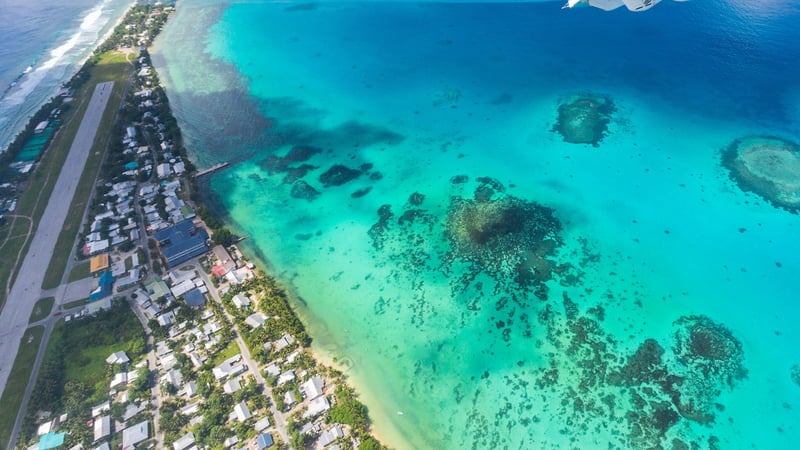
Tuvalu is one of the world’s smallest states, a Pacific atoll nation of around 11,000 people using the Australian dollar.
Two routes exist. A local entity gives direct employment; an Employer of Record removes that setup and acts as legal employer.
The Tuvalu National Provident Fund is the only compulsory contribution. It was established under the Provident Fund Act of 1984, and contributions are allocated to interest-generating investments that fund pension and other benefits.
Employment is governed by the Employment Act, with income tax administered separately by the Revenue Office. International employers here are concentrated in government advisory roles, development projects, telecommunications and fisheries management.
Sources: ISSA country profile - TuvaluGX operating experience. Tuvalu EOR payrollverified 26 August 2026
EOR, entity or contractor, which model fits?
10% of gross earnings. The employee contributes 13%, so unusually the employee pays more than the employer.
Employer contributions are 10% of gross earnings, and the employee pays more.
The Fund states it plainly: the member is required to contribute 13% of gross earnings per month, while every employer will pay the TNPF contribution of 10%. That gives a total of 23% paid into the member’s account.
An employee contribution exceeding the employer’s is uncommon, most provident funds match or weight toward the employer. It means the headline 23% overstates the employer’s share considerably, and a cost model built on "roughly half of 23%" would be wrong by three percentage points.
The employee’s share is calculated and deducted at the time of payment of wages, which may be fortnightly or monthly.
| Employer of Record | Tuvalu citizens 15–55 | Everyone else | |
|---|---|---|---|
| Time to first hire | 4–8 weeks | 3–6 months via own entity | Same |
| TNPF membership | Confirm eligibility | Compulsory | Voluntary |
| Employer contribution | 10% | 10% of gross | 10% if enrolled |
| Employee contribution | 13% | 13% of gross | 13% if enrolled |
| Misclassification risk | Low, statutory employment | Low, statutory employment | Medium, penalties and reputational risk on government contracts run the risk check |
| Best for | First 1–12 hires, market entry | Local hires | Expatriate specialists |
Break-even rule of thumb: EOR fees begin to exceed the running cost of a local entity somewhere between 12 and 20 employees. See EOR vs Entity.
Sources: ISSA country profile - TuvaluGX operating experience. Tuvalu EOR payrollverified 26 August 2026
How Employer of Record hiring works in Tuvalu
How much does it cost to employ someone in Tuvalu?
Into two accounts. Of the 23% total, 73.91% goes to the member’s Retirement Account and 26.09% to their MEDU account.
The 23% does not all go to retirement, and the split is worth explaining to employees.
From the total contributions received for a member, 73.91% is deposited into the member’s Retirement Account while 26.09% goes into their MEDU account.
Those percentages look arbitrary but are not. 73.91% of 23% is exactly 17 percentage points, and 26.09% is exactly 6, so the design is simply 17 points to retirement and 6 to MEDU, expressed as fractions of the whole.
On a gross salary of A$40,000 that means A$9,200 in total contributions, of which A$6,800 builds the retirement balance and A$2,400 sits in the MEDU account.
This is an allocation of the same 23%, not an additional charge. It does not change employer cost, but it does change what an employee should expect to see in their retirement balance, roughly three-quarters of what was paid in.
All contributions are invested to earn interest.
Sources: Tuvalu National Provident Fund. Become a MemberEmployer contribution schedule 2026verified 26 August 2026
2026 mandatory employer contributions
| Contribution | Total rate | Employer share | 2026 cap | Effective cost |
|---|---|---|---|---|
| Provident Fund, employer | 10% | 100% employer | No ceiling | On gross earnings |
| Provident Fund, employee | 13% | 100% employee | No ceiling | More than the employer pays |
| Combined into the account | 23% | Employer and employee | No ceiling | Paid into the member account |
| Retirement Account share | 73.91% | Of the 23% | 17 points | Builds the retirement balance |
| MEDU Account share | 26.09% | Of the 23% | 6 points | An allocation, not an extra charge |
| Deduction timing | At payment of wages | Employee share | Fortnightly or monthly | |
| Mandatory membership | Ages 15 to 55 | Tuvalu citizens | Employed and paid in Tuvalu | |
| Voluntary membership | Available | Everyone else | Including foreign staff | |
| Other payroll levies | None | TNPF is the only compulsory scheme | ||
| Total mandatory employer cost | 10% | No ceiling | No ceiling applies |
Worked example
| Gross annual salary A$40,000 | A$3,333 a month |
| Provident Fund employer at 10% | A$4,000 |
| Employee contributes 13% | A$5,200 |
| Total into the member account | A$9,200, or 23% |
| Of which Retirement Account | A$6,800 |
| Of which MEDU account | A$2,400 |
| Total employer cost | A$44,000 · 10% above gross |
Tuvalu employer-cost calculator
Enter a gross monthly salary to see the breakdown.
What does a real hire cost? Benchmarks by role
Gross annual salaries in Australian dollars. Employer cost is a flat 10% with no ceiling.
Benchmarks below are gross annual salaries in Australian dollars, which Tuvalu uses as its currency. Employer cost is a flat 10% with no ceiling.
Sources: ILO EPLex - TuvaluGX Country Intelligence researchTuvalu salary survey data 2026verified 26 August 2026
How Tuvalu compares & employer on-costs in the region
Indicative 2026 statutory employer rates on typical professional salaries, before benefits and 13th-month customs. Full country data: hiring in Kiribatihiring in Palau.
How do payroll, income tax and the 13th month work?
Deducted at the time wages are paid, whether fortnightly or monthly, and remitted monthly to the TNPF.
The employee’s share is deducted at the time wages are paid, on either a fortnightly or a monthly cycle, with contributions remitted monthly to the TNPF.
Employers must register with the TNPF and enrol all eligible employees before the first payroll run.
Income tax is withheld and remitted separately to the Revenue Office.
Given the country’s remoteness and small administrative base, allow more lead time for registration and filing than a comparable market would need.
Sources: verified 26 August 2026
2026 resident income tax brackets
Income tax runs from 0% to 30% under the Income Tax Act, administered by the Revenue Office.
Tuvalu residents are subject to the Income Tax Act, which requires a deduction from a resident’s taxable income.
The income tax rate ranges from 0% to 30% depending on the level of income.
Confirm the current bands with the Revenue Office before configuring payroll.
| Band | Rate |
|---|---|
| Income tax range | 0% to 30% under the Income Tax Act |
| Administration | The Revenue Office |
| Minimum wage | None, no statutory floor exists |
| Benchmarks in practice | Government salaries and living costs |
| Employee contribution | 13% of gross earnings |
What does Tuvaluese labor law require?
There is none. Tuvalu has no statutory minimum wage, so government salaries and living costs are the real benchmarks.
Tuvalu has no statutory minimum wage.
Wages are set by agreement rather than by a legal floor, which leaves the burden of setting a defensible rate entirely with the employer. In practice government salaries and living costs provide the real benchmarks.
Contributions are not flexible even though wages are. Every employer must contribute to the TNPF regardless, so payroll cost has a fixed statutory floor even where pay does not.
Discussion of wage regulation is expected to continue. Rising living costs, reliance on imported goods and pressure from international labour standards may eventually push the government to formalise a wage floor, so it is worth monitoring policy rather than assuming the position is permanent.
Paying in line with the real cost of living is the pragmatic approach, and positions an employer ahead of any future reform.
Sources: ILO EPLex - TuvaluISSA country profile - TuvaluILO EPLex - Tuvaluverified 26 August 2026
Contracts & probation
Employment contracts should specify the role, remuneration, working hours, leave entitlements and notice requirements.
Confirm citizenship and age at contracting, since mandatory TNPF membership turns on both.
Register with the TNPF and enrol the employee before the first payroll run.
Working hours & overtime
The standard working week is 40 hours.
Overtime is payable at premium rates for hours worked beyond the normal working period.
Contributions are calculated on gross earnings, so overtime enters the base for both the 10% and the 13%.
Annual leave
| Tenure | Paid annual leave |
|---|---|
| Working week | 40 hours |
| Overtime | Payable at premium rates |
| Minimum wage | None, no statutory floor |
| Pay cycle | Fortnightly or monthly |
| Mandatory membership | Citizens aged 15 to 55 |
| Governing statute | Employment Act |
Public holidays
Tuvalu observes public holidays including Tuvalu Day at the start of October and Gospel Day in May.
Tuvalu observes public holidays including Tuvalu Day at the start of October and Gospel Day in May.
| Holiday | Date (2026) |
|---|---|
| New Year’s Day | Thu 1 Jan |
| Commonwealth Day | Mon 9 Mar |
| Good Friday | Fri 3 Apr |
| Easter Monday | Mon 6 Apr |
| Gospel Day | Mon 11 May |
| King’s Birthday | Mon 8 Jun |
| National Children’s Day | Mon 3 Aug |
| Tuvalu Day | Thu 1 Oct |
| Tuvalu Day holiday | Fri 2 Oct |
| Heir to the Throne’s Birthday | Sat 14 Nov |
| Christmas Day | Fri 25 Dec |
| Boxing Day | Sat 26 Dec |
Family & sick leave
Membership is compulsory only for Tuvalu citizens aged 15 to 55 who are employed and paid for work in Tuvalu. Others may join voluntarily.
Mandatory membership is narrower than in most schemes, and turns on two tests at once.
Contributions are compulsory for Tuvalu citizens who are employed and paid for work in Tuvalu, and who are between the ages of 15 and 55.
So the obligation depends on citizenship as well as age. A foreign specialist working in Tuvalu is not within compulsory membership, and neither is a citizen aged 56 or over, an upper limit well below normal retirement age in most comparable funds.
Those outside the mandatory group may join voluntarily. That is worth raising with an expatriate hire, since enrolment is a choice rather than an automatic consequence of employment.
Maternity leave is paid, with the cost generally borne by the employer rather than the fund. Public holidays, annual leave and sick leave apply to employees under contract.
The MEDU account provides a separate call on contributions alongside the retirement balance.
| Leave | Entitlement | Pay |
|---|---|---|
| Retirement Account | 73.91% of contributions | Equal to 17 points of the 23% |
| MEDU Account | 26.09% of contributions | Equal to 6 points of the 23% |
| Investment | Contributions earn interest | Invested by the Fund |
| Maternity leave | Paid entitlement | Cost generally borne by the employer |
| Annual and sick leave | Apply under contract | Alongside public holidays |
| Voluntary enrolment | Open to non-citizens | And to citizens over 55 |
| Upper age limit | 55 for compulsory cover | Low against comparable funds |
| Provident Fund Act | Initiated in 1984 | The founding statute |
| Registration | Before the first payroll run | Employer must enrol eligible staff |
Termination, notice & severance
Termination follows the Employment Act, with notice and procedure set by statute and contract.
Non-compliance carries reputational as well as financial consequences, and the point is made specifically about foreign businesses under government contracts, in an economy this small, a contribution failure is unlikely to stay private.
Confirm the position on release of the fund balance with the TNPF at the point of exit.
How do work permits and visas work in Tuvalu?
Foreign nationals employed in Tuvalu require appropriate work authorisation from the relevant Tuvaluan authority.
Foreign staff fall outside compulsory TNPF membership, since it applies to citizens, but voluntary enrolment is available and should be discussed rather than assumed either way.
Salaries are paid in Australian dollars, so there is no local currency risk for an AUD-denominated employer.
| Route | Who it fits | Key criteria | Notes |
|---|---|---|---|
| Work authorisation | Foreign nationals | From the relevant authority | Required before employment |
| TNPF membership | Foreign nationals | Outside compulsory cover | Voluntary enrolment available |
| Currency | All employers | Australian dollar | No local currency risk |
Sources: ILO EPLex - TuvaluISSA country profile - Tuvaluverified 26 August 2026
What are the main compliance risks when hiring in Tuvalu?
One provider states the employer rate is about 5%. The Fund’s own figure is 10%, and that is what applies.
Using an understated employer rate is the clearest error. One provider states employer contributions are typically around 5%. The Fund’s own published figure is 10%, and that is what applies.
Splitting the 23% evenly is the second, the employee pays 13% and the employer 10%, so assuming a matched contribution overstates employer cost by more than a point.
Assuming universal membership is the third. Compulsory cover applies to citizens aged 15 to 55; others enrol voluntarily.
Note also that there is no statutory minimum wage; that maternity pay falls on the employer; and that the MEDU allocation means only about three-quarters of contributions build the retirement balance.
Sources: ISSA country profile - TuvaluGX Country Intelligence researchverified 26 August 2026
Contractor misclassification risk check
Answer for the Tuvalu-based person you currently pay as a contractor. Indicative only — not legal advice.
Compliant onboarding checklist
Apply 10% employer and 13% employee on gross earnings, and register with the TNPF before the first payroll run.
Check citizenship and age to establish whether membership is compulsory or voluntary, and raise voluntary enrolment with expatriate hires.
Set pay against government salaries and living costs, since no statutory floor exists, and confirm income tax bands with the Revenue Office.
Hiring in Tuvalu & frequently asked questions
The full 2026 Tuvalu hiring guide — rates, tables and checklists — formatted for sharing with your finance and legal teams.
Sources: verified 26 August 2026
Terms used on this page
Sources: verified 26 August 2026
How this guide is compiled and verified
Every figure is taken from the primary Tuvalu government source, checked against GX’s in-country payroll operation, and dated. This guide was last reviewed on 26 August 2026, and is next scheduled for review in November 2026 — or immediately if rates change in between.
- Tuvalu National Provident Fund. Become a Member — The 10% and 13% contribution rates and the Retirement and MEDU split · verified 26 Aug 2026
- Tuvalu National Provident Fund, membership — Deduction timing and investment of contributions · verified 26 Aug 2026
- ILO EPLex - Tuvalu — Membership age and citizenship limits and the Provident Fund Act 1984 · verified 26 Aug 2026
- ILO EPLex - Tuvalu — Registration duties, the Employment Act and working hours · verified 26 Aug 2026
- ILO EPLex - Tuvalu — The absence of a statutory wage floor and maternity cost allocation · verified 26 Aug 2026
- ISSA country profile - Tuvalu — The statute establishing the Fund and its investment mandate · verified 26 Aug 2026
- ILO EPLex - Tuvalu — Employment conditions, contracts and notice requirements · verified 26 Aug 2026
- ISSA country profile - Tuvalu — Resident income tax from 0% to 30% · verified 26 Aug 2026
- GX Country Intelligence research — Income tax administration and filing · verified 26 Aug 2026
- GX Country Intelligence research — An outlying employer contribution figure, recorded for comparison · verified 26 Aug 2026
- ISSA country profile - Tuvalu — Authorisation for foreign nationals employed in Tuvalu · verified 26 Aug 2026
- ILO EPLex - Tuvalu — Working hours, leave entitlements and compliance exposure · verified 26 Aug 2026
- GX operating experience. Tuvalu EOR payroll — Onboarding timelines, EOR fee structure and practical employer obligations observed in live payrolls · verified 26 Aug 2026
- Tuvalu salary survey data 2026 — Indicative gross annual earnings used for role benchmarks · verified 26 Aug 2026
- Tuvalu public holiday calendar 2026 — Public holidays including Tuvalu Day and Gospel Day · verified 26 Aug 2026
- Employer contribution schedule 2026 — The 10% rate applied in the cost calculator · verified 26 Aug 2026
- Account allocation note — Reconciliation of the 73.91 and 26.09 split against the 23% total · verified 26 Aug 2026
Read our editorial policy, corrections policy and CountryPedia methodology.
Sources: verified 26 August 2026
Ready to hire in Tuvalu?
GX employs your candidates compliantly, contract, Australian dollar payroll, TNPF registration and monthly remittance handled, no entity required.